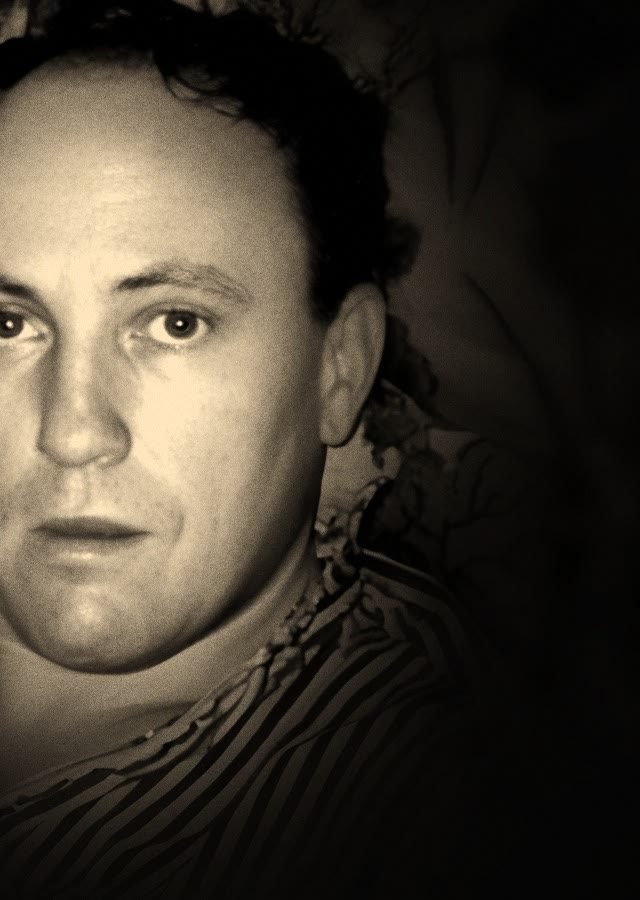
In December 2015, a dog walker in the woods near the Five Sisters business park, outside West Calder in West Lothian, found human remains in a shallow grave.
The police already had a good idea whose they might be. For eight months they had been looking for a man they had described to the public as dangerous, and had told people not to approach. He had been on BBC Crimewatch. Crimestoppers had put up a £2,000 reward. Some of the officers had begun to suspect that the man they were hunting was not hiding at all.
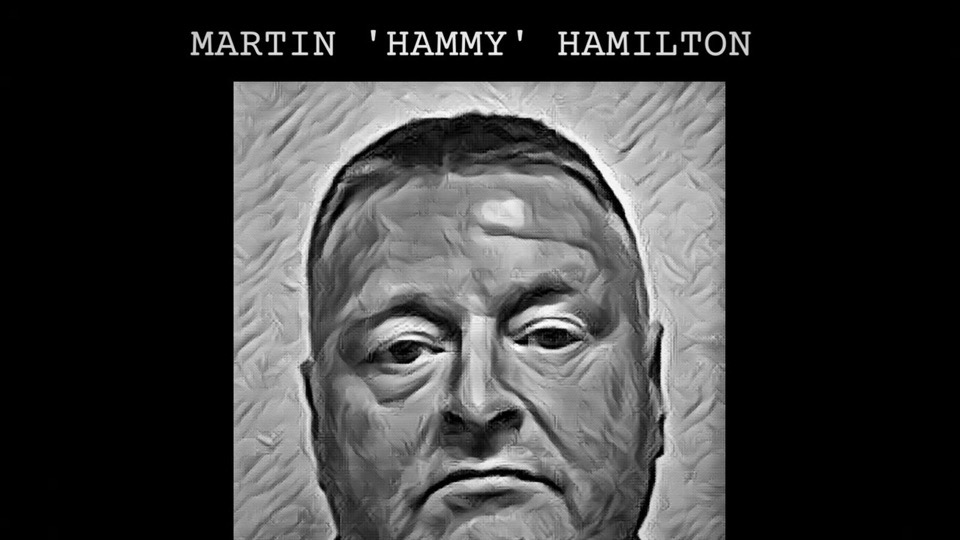
The remains were 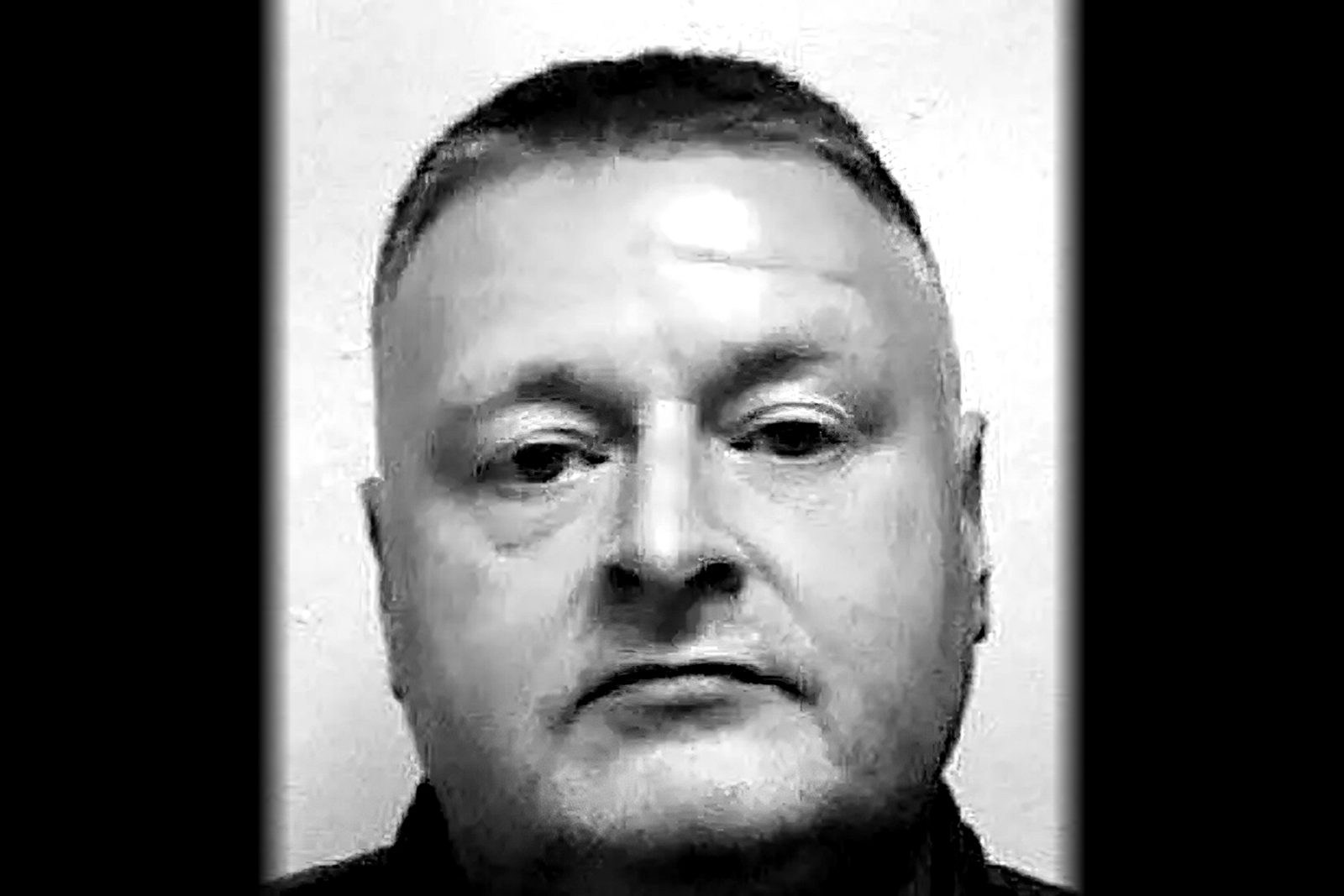 Martin Hamilton's. He was fifty-three. In Glasgow they had called him the Blackhill Butcher, and one newspaper had called him something worse. Scotland's most hated criminal.
You took sadistic pleasure in the infliction of pain
Lord Kingarth, High Court in Inverness, 2000
The question of who put him in that wood has never been answered in a court.
1
Blackhill
Hamilton came from Blackhill, a scheme in the north-east of Glasgow, and he made his living from drugs and armed robbery. In 1984 the High Court in Glasgow gave him six years for assault to severe injury and carrying an offensive weapon.
After he came out, the police had less luck. As many as twelve High Court cases against him collapsed, usually because the witnesses were too frightened to give evidence.
Other people tried a more direct approach. In early 1990 Hamilton was shot twice, on two separate occasions, near his home. Neither shooting did him much harm. The Glasgow Times ran the headline that followed him for the rest of his life, describing him as Scotland's most hated criminal. At the time, very few people apart from Hamilton disagreed.
In 1992, aged thirty, he was one of four men convicted at the High Court in Stirling of conspiring to rob a Dunfermline Building Society branch at Anniesland Cross in Glasgow. The gang had broken in overnight with knives and an imitation handgun and lain in wait for the staff, hoping to force them to empty the cash machine. The police had been tipped off. Armed officers surrounded the building and sealed off the Cross. Hamilton got nine years.
Timeline
- 1984Six years for assault and carrying a weapon
- 1990Shot twice near his home
- 1992Nine years for the Anniesland Cross plot
- 2000Convicted of torture at Inverness
- Sep 2014Released on licence from Shotts
- 16 Apr 2015Last seen on Great Western Road
- Dec 2015Remains found near West Calder
- 2017Accused man dies before trial
2 · 2000
Edinburgh
When he came out in the late 1990s he did not go home. He went east, to Edinburgh, and set out to take over the heroin trade in the west of the city, in Broomhouse, Wester Hailes and Sighthill.
The officers of the old Lothian and Borders force barely knew his name when he arrived. They learned it quickly. A string of attacks on local dealers who owed money brought him to their attention, and they put a surveillance team on him round the clock.
What they found, according to the case that followed, was a man running teenage dealers on heroin and ecstasy and punishing the ones who could not pay. In one attack, one of his enforcers cut off a young man's finger and tried to gouge out his eye with a teaspoon. A businessman being squeezed for money told detectives he would rather pay Hamilton another thirty grand than give evidence against him.
As always, the victims would not talk. The case was saved by two teenagers, a boyfriend and girlfriend, who did. The court heard they had been held captive for eleven hours in a flat, scalded with boiling water and stabbed, and then made to stand in a bath so they would not drip blood on the carpet. Once they agreed to give evidence, detectives went back to other victims, and some of them agreed to make statements too.
The trial was moved to the High Court in Inverness, two hundred miles from where the crimes took place, so the witnesses could be protected. Every one of them was on a police protection scheme. In November 2000 Hamilton was convicted of drug dealing, abduction, assault and torture.
The judge, Lord Kingarth, did not hold back. "It is clear to me that you pose a substantial danger to the public while at liberty," he told him. "You took sadistic pleasure in the infliction of pain." One senior Edinburgh detective went further. "Hamilton is without doubt the most dangerous criminal we've ever seen," he said, and he put him second only to the child killer Robert Black.
3 · 2014
Out on licence
In September 2014 Hamilton was released on licence from HMP Shotts. He had spent much of his adult life behind bars.
Within months the police wanted him back. He was due in court in Glasgow on other charges and did not turn up. He was wanted for breaching his licence. Police Scotland issued an appeal in April 2015, warning the public that he was potentially dangerous. In October the case went on Crimewatch.
By then he had already been dead for months. He was last seen alive at about lunchtime on Thursday 16 April 2015, on Great Western Road in Glasgow. The police later said he may have been killed around then.
4 · 2015
The wood
The dog walker found him in December, close to the road near West Calder. A post-mortem found serious injuries that were believed to have killed him, and Police Scotland opened a murder inquiry. One newspaper reported that the body had been cut up. The police said that was not true, that the remains were intact, and that reports saying otherwise were "unhelpful to our investigation". Within a fortnight the detectives had moved their attention to Blackburn, a small town nearby, with door-to-door inquiries and extra patrols. The officer leading the case, Detective Superintendent Kenny Graham, said only that the area had become "of interest".
There were plenty of theories about why. Hamilton had been working the small towns of West Lothian, and the talk was that he had been trying to muscle back into the Edinburgh trade. Another story in the underworld was that he had been asked to collect a drug debt of about forty thousand pounds for a Liverpool supplier, and had kept it. None of it was ever tested.
At the end of January 2016, police arrested a man from Blackburn, then in his early fifties, and charged him with the murder. The case never reached a jury. In 2017 a judge postponed the trial after hearing the accused was seriously ill. His solicitor said he had "a very weak and poor prognosis". He was released on compassionate grounds that March, and he died days later. The Crown closed the case.
Nobody has been convicted of killing Martin Hamilton.
 Rather watch it?The film is on Gangland & True Crime Docs.Watch →
5 · 2016
The funeral
His funeral was held up for months by the investigation. When it finally took place in August 2016, at Maryhill Crematorium in Glasgow, it lasted about twenty minutes, and only a handful of people came. The death notice in the paper the week before had called him a beloved son, a loving brother and a friend to many.
One underworld figure gave reporters a less loving tribute. "Martin was a lone wolf," he said. "He had some power but no strong allegiances to any particular gang. No one wanted to work with him really. He was definitely Scotland's most hated criminal."
Twelve High Court cases against him fell apart because witnesses were too frightened to speak. In the end, the case of his own murder fell apart too.
The full story is in our film on Gangland.