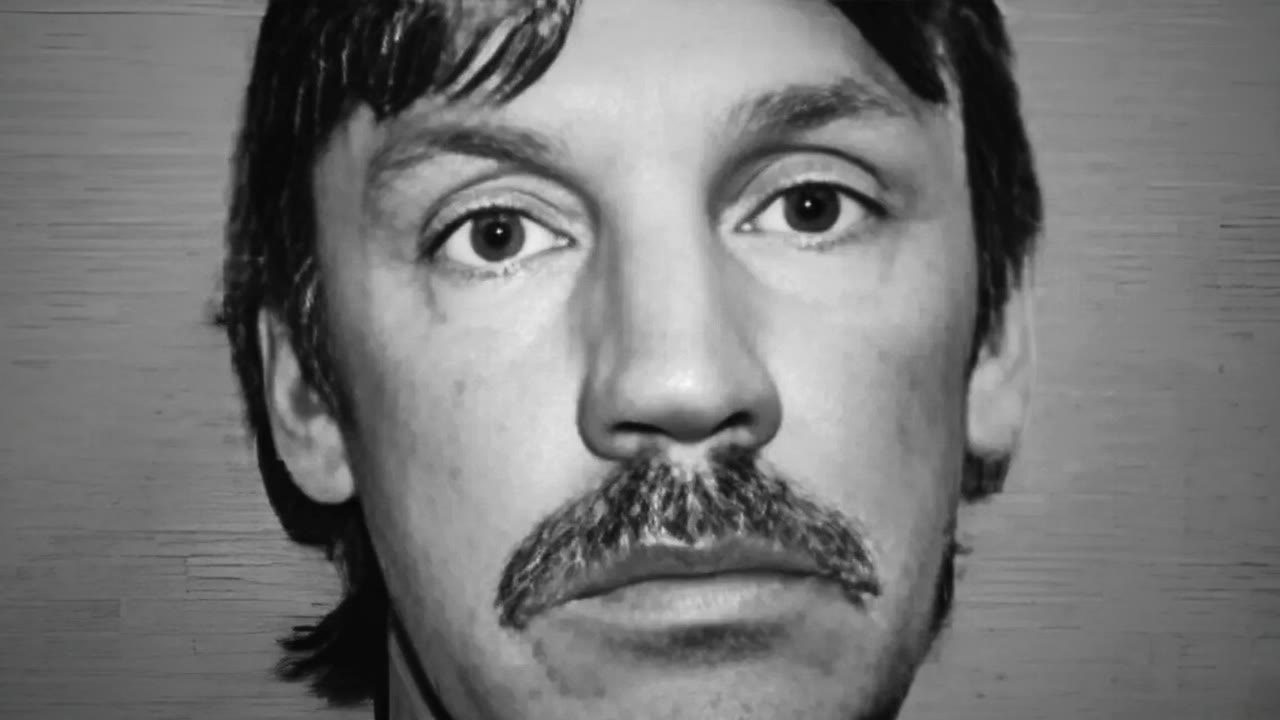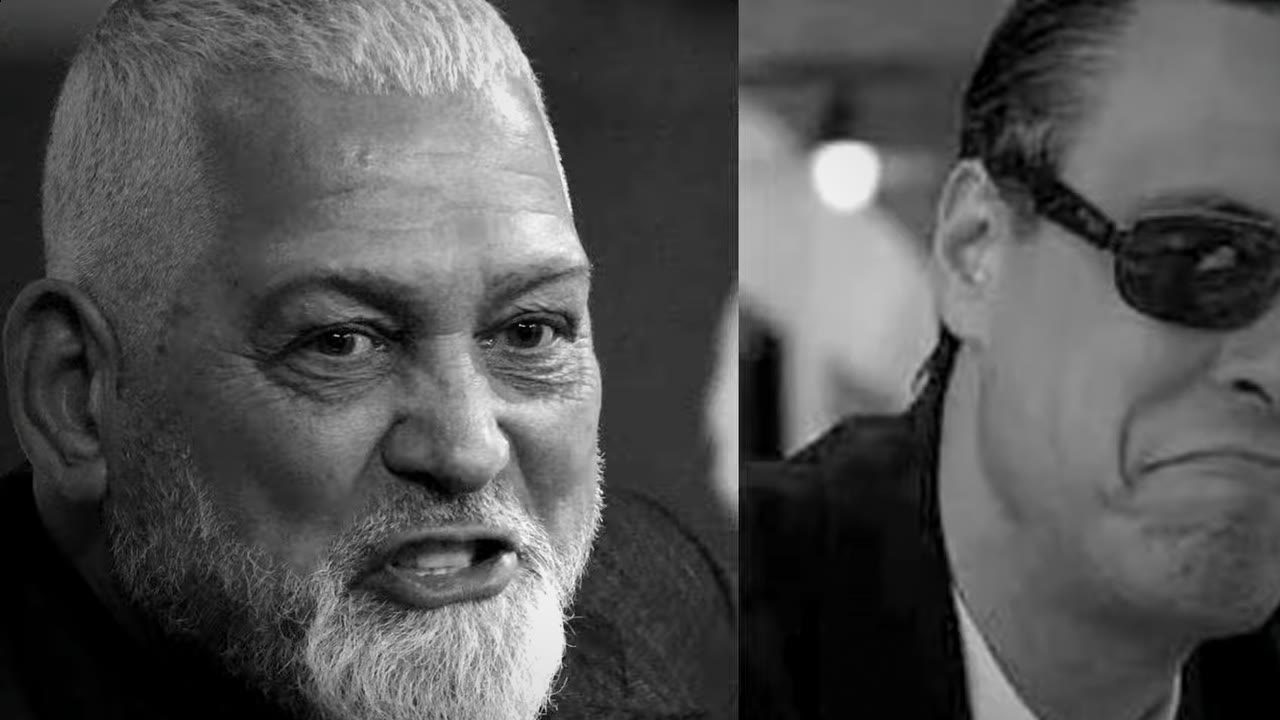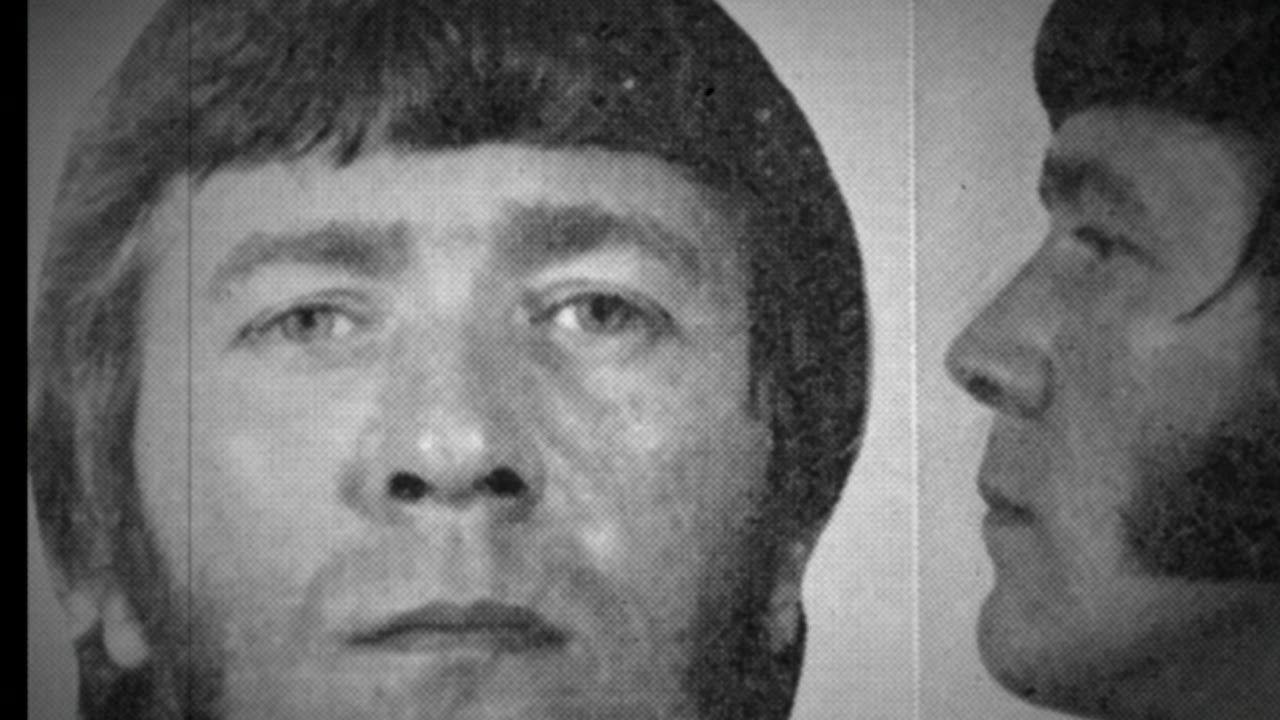
The guards always opened the back door to put the rubbish out, and on Wednesday 4 March 1970 three men in dust coats and sunglasses were crouched behind the van waiting for it.
It was half past twelve on a sweltering day, in the car park beside the Commonwealth Bank at Guildford, in Sydney's west. The Mayne Nickless van had pulled in at about twenty to twelve, as it did every day, so the three guards could eat their lunch before the delivery. When the door swung open, three silenced pistols came up.
Nobody fired. One of the robbers, Frank Blair, known as Baldy, had a line for moments like that, his stepson Larry remembered. "Don't let's turn robbery into murder." The guards were tied up with rope and their mouths taped. Twenty-four green canvas sacks marked RESERVE BANK went into the getaway car. They held $587,890, the biggest armed robbery Australia had ever seen.
Don't let's turn robbery into murder.
Baldy Blair, as his stepson Larry remembered him
The police never found most of it. Somebody else went looking too. They were the robbers' own friends, and they had a blowtorch.
1 · 1970
The lunch break
Blair was thirty-four, a bank robber who had come up from the Melbourne waterfront. With him were two more men from Melbourne: Stephen Nittes, a former lightweight boxer, and Alan Jones, a quiet man of twenty-nine. The newspapers later named the planner as Leslie Woon, a criminal the police called "one of the most brilliant, cunning and meticulous" in the country. He never went near the car park. He had worked out that the cash sat behind a door the guards would open themselves.
The three gunmen took about ninety thousand dollars each. Woon took about half. Some of it went to an inside man at Mayne Nickless.
Blair came home to Maroubra a few days later in a brand-new Chrysler Valiant V8, revved it three times in the drive and leapt out shouting "V8! V8!" That night the whole crew had a banquet at the Mandarin Club in George Street. Then he hid the rest. One morning his eleven-year-old stepson was stood on a table in a betting shop in Lexington Place and told to push up the ceiling tiles. The green bags were handed up to him one at a time, and he threw them into the dark.
Timeline
- 4 Mar 1970Mayne Nickless van robbed at Guildford
- Apr 1970Baldy Blair vanishes outside the Oceanic at Coogee
- Sep 1970Nittes arrested at a Randwick motel
- May 1972Robert Donnelly and Kevin Gore vanish two days apart
- Nov 1972Jake Maloney shot dead in Revesby
- 1975Linus Driscoll convicted of Maloney's murder
- 1977Conviction quashed; Driscoll acquitted at retrial
- 2020Coroner finds Donnelly dead and names the gang
2 · 1970
The easiest money in Sydney
A bank can report a theft. A man holding the proceeds of one cannot. If his share is taken from him, there is no policeman to ring and no court to go to. That made the Guildford money the easiest money in Sydney to steal.
Everybody on the beachfront at Coogee knew who had it. Blair held court every afternoon on the concrete terrace at the top of the steps of the Oceanic Hotel, the pub the family called the Oshey. Some of the men on those steps were his friends. Some of them were already thinking about his share.
Larry Blair later named them in his memoir, The Outside. Kevin Gore was a safecracker and a regular on the terrace, an expert with the oxy-acetylene torch, who would later marry into the family's circle. Billy Maloney, a redhead who once gave Larry five dollars for a song and dance on the steps, "knew exactly where to find Dad most of the time". Billy Maloney was never charged with any of it. Linus Driscoll, known as Jimmy the Pom, was Baldy's quiet drinking mate from the Oshey. He was never charged over Blair, and nothing on the record convicts him of anything that happened to him.
When a New South Wales coroner looked back fifty years later, she listed four men "believed to have been" in the gang: Driscoll, Billy Maloney, his brother John, known as Jake, and Kevin Gore. She described them as "a Sydney criminal gang whose modus operandi was extortion of money from other known criminals". The papers had a shorter name. They called them the Toe Cutters.
"These were people who he knew perfectly well as individuals," Larry wrote, "but not all together as the group they had just become."
3 · 1970
The cellar
One afternoon in April 1970, Blair was sitting on the Oceanic steps when a van pulled up across the road, by the bus sheds. The men in it waved him over to look at some stolen goods in the back. On that terrace it was the most ordinary invitation in the world. Larry thought his father was "coaxed – probably pulled – inside".
Nobody saw him alive again.
Where they took him is the part of the story the underworld kept telling. A Sydney standover man, Graham Henry, heard a few years later that the Toe Cutters worked out of the cellar of the Iron Duke hotel in Alexandria. "They got one of them, Baldy Blair," he said, "and they got him down in the … bottom of that hotel." The crime historians Susanna Lobez and James Morton put it in the same place.
What happened there, Larry wrote down as the family heard it. They wanted to know where the money was. Blair would not tell them. By that account, Gore used his torch on him while Billy Maloney held him down, and then his toes were cut off one at a time with bolt cutters. Neither man was ever charged over it. Blair died of what was done to him. Nobody has ever been charged, and no body has ever been found. The elders told Larry it was dissolved in acid and buried under Sydney Airport, where the runway was being pushed out into Botany Bay that year.
It was the story that made the gang's name. Larry heard that Baldy's toes were posted to gangsters around the country as a warning.
4 · 1970
Who gave him up
There is a question underneath all this. Somebody told the Toe Cutters where to find Baldy Blair, and that his money was hidden.
Larry's family always blamed Alan Jones. After the robbery Jones went to ground, and then, in Larry's words, "made a fairly dotty error; he went back to the Oshey for a beer". By the story Larry was told, he was grabbed almost as soon as he walked in and shown the bolt cutters and the torch. He walked out with all ten toes. Most people who knew the story, Larry wrote, believed he paid for them "by telling them where Dad was".
James Morton tells it differently. In his version it was Nittes who was caught, and Nittes who paid, with twenty thousand dollars and the name of another robber who "foolishly wanted to hold on to his share". The story about the toes in the post says one of them reached Nittes, hiding in Melbourne.
The police got there more slowly. Jones was arrested at home in Melbourne. Nittes was found on 23 September 1970 at a motel in Randwick. Jones pleaded guilty, Nittes was convicted, and Judge Aaron Levine gave each man sixteen years. "I am not a bad man, judge, really," Nittes said as he was taken down. Within months of reaching Parramatta Gaol, Larry heard, Jones was stabbed by another prisoner.
Then there is the money. When the family finally came home to Sydney, the canvas bags marked RESERVE BANK were exactly where an eleven-year-old boy had thrown them, in the ceiling of the betting shop in Lexington Place.
Baldy Blair had let them take his toes one at a time rather than tell them.
5 · 1972
The wrong car
The underworld did not like what the Toe Cutters were said to have done to one of its own, and the Melbourne docks had not forgotten that half the Guildford money had gone south in their name. Within two years the hunters were being hunted.
On the evening of 1 May 1972 a small-time shoplifter called Robert Donnelly borrowed Kevin Gore's Ford Fairlane from Gore's house in Rose Bay, and promised to bring it back in the morning. Anybody in Sydney looking for Gore would have known that car on sight. Donnelly was never seen again. Two days later Gore left an office in Paddington with Johnny Regan, a standover man the same coroner described as "a hitman, who specialised in murdering other criminals", saying he would be "back in half an hour". He was never seen again either. Regan was never charged with anything, and he was shot dead in 1974.
The Fairlane turned up burnt out in Earlwood. A coroner later found that Gore had died on or about 3 May 1972, and recorded that his disappearance "was one of a number of reprisal attacks carried out by figures from the Melbourne underworld on the 'Toe Cutters'". About Donnelly the police view was simpler. "The consensus was that Mr Donnelly was murdered in mistake of Kevin Gore when he was driving Kevin Gore's car." In 2020 the Deputy State Coroner found Donnelly dead, and could say nothing about where or how.
 Rather watch it?The film is on Gangland & True Crime Docs.Watch →
6 · 1972
Revesby
By November the men who were left were watching each other. Somebody hid ten sticks of gelignite under the back seat of Linus Driscoll's family car at Oatley. He rang the police, and, by the detectives' account, gave them two names: Jake and Billy Maloney. Billy Maloney was never charged with anything to do with the Toe Cutters.
Shortly before midnight on Friday 24 November, Jake Maloney was alone in a safe house in Revesby. Somebody shot him twice in the back of the head. Weeks later an abalone diver found a silenced .22 machine pistol on the seabed off Bondi.
Linus Driscoll was arrested in Melbourne in July 1974, convicted of the murder in February 1975 and sentenced to life. The case against him rested on records of interview he had refused to sign. In 1977 the High Court quashed the conviction, in a judgment that warned that "the mere existence of a record is no safeguard against perjury". At the retrial in November 1977 the jury found him not guilty. On any record that can be checked, he stands convicted of nothing that happened at Revesby.
So the score at the end was this. Two of the Guildford robbers went to prison for sixteen years. The third was dead, and nobody has ever found him. Of the four men the coroner named, one had vanished and one had been shot dead before 1972 was out. A third was tried for that killing and acquitted. Not one man was ever convicted of anything the Toe Cutters were said to have done.
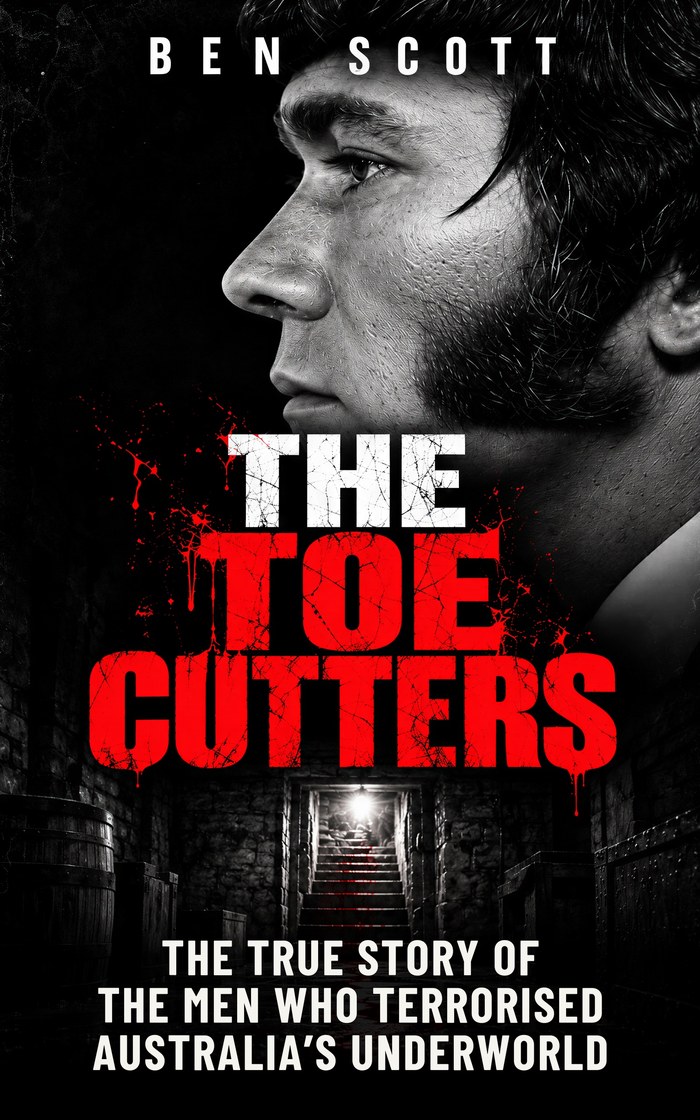
The full story is in our film on Gangland, and in the book.