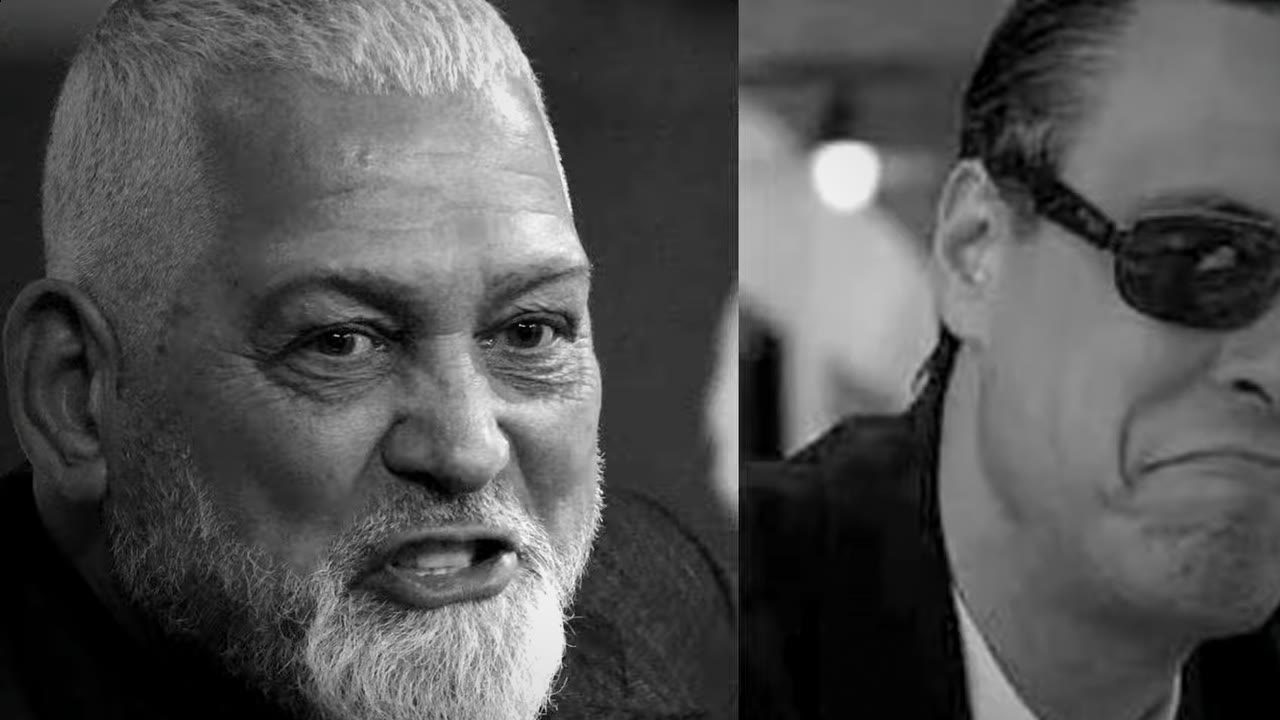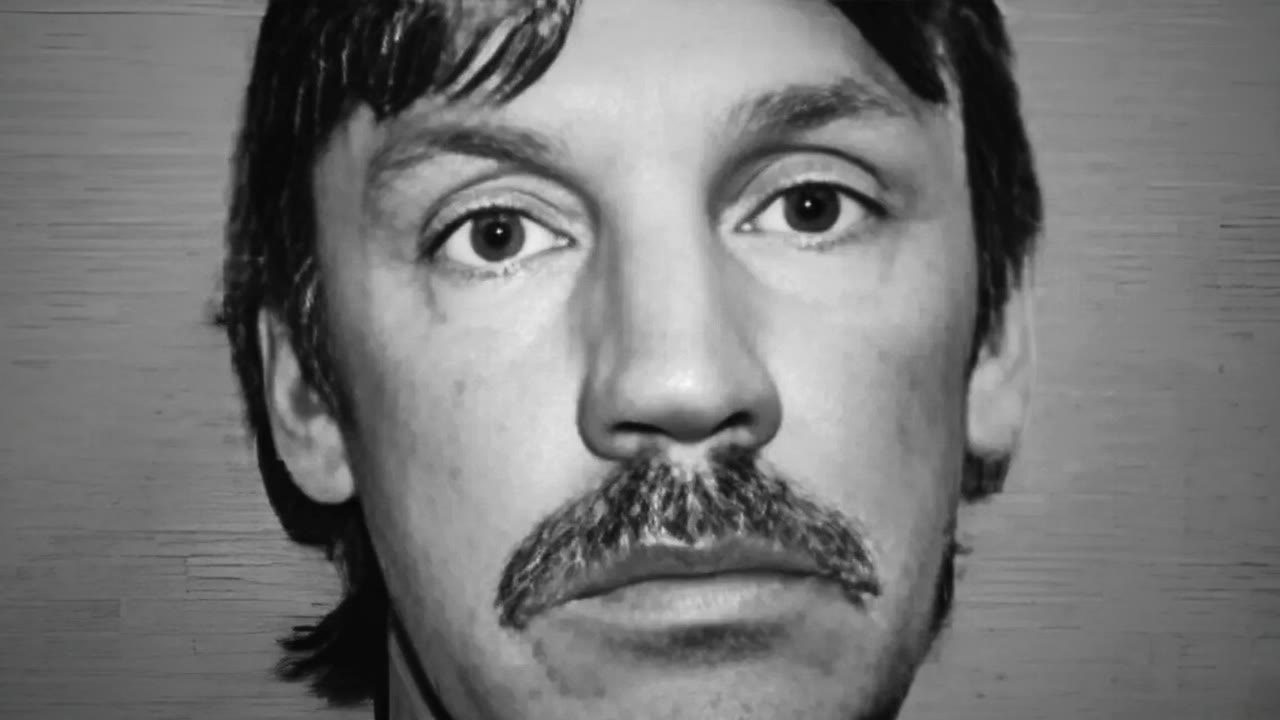
On 12 April 2004 Terrence Blewitt got out of a friend's car on a street in Melton, on the western edge of Melbourne, and walked towards a Hyundai sedan parked nearby. His friend watched him go. That was the last time anyone who knew him saw him.
He was fifty-three. He was a career criminal, an armed robber with a long record and, by the account of a former armed robbery detective quoted in the Sunday Herald Sun, "a major notorious armed robber, a nasty bloke". The next day his partner rang the police to say he had not come home.
In the underworld that is not always news. Men go away for a while. Blewitt did not come back, and it took the police nearly twelve years and four thousand cubic metres of dirt to find out where he had gone.
the most base of human motives
Justice Stephen Kaye, sentencing Stephen Asling, April 2017
The reason they kept looking had happened four months earlier, in a quiet street in Kew.
1 · 2003
The man in Belmont Avenue
Graham Kinniburgh was sixty-one, and in the Melbourne underworld he was a man other men listened to. They called him the Munster. He had come up on the waterfront as a member of the Painters and Dockers Union, and he was a long-standing friend of the Moran family. Six years before, he had been in Alphonse Gangitano's house in Templestowe on the night Gangitano was shot dead in his laundry, and he had said nothing to the police about it.
On the night of 13 December 2003 he parked his car outside his two-storey house in Belmont Avenue, Kew, and started to walk to his door. His wife, Sybil, and his son were at home. Somebody was waiting for him in the dark.
Kinniburgh was not a man who went out unarmed. He got off one shot from his own gun, and it missed. He was hit several times and died almost at once, from a wound to the back of the head, about fifteen metres from his car.
A car was reportedly seen leaving Belmont Avenue shortly afterwards. The police would spend years on that car.
Timeline
- 13 Dec 2003Graham Kinniburgh shot dead outside his home in Kew
- Mar 2004Andrew Veniamin and Lewis Moran shot dead within eight days
- 12 Apr 2004Blewitt last seen in Melton
- 2013A blue Hyundai Excel seized in Alexandra
- Nov 2015Stephen Asling charged with Kinniburgh's murder
- Jan 2016Remains dug up in Thomastown
- Mar 2017Asling found guilty
- 2018Asling's appeal dismissed
2 · 2004
Four months in Melbourne
Melbourne was in the middle of a gang war, and the Munster's death was a turn in it. Carl Williams, a drug dealer from Broadmeadows, had been at war with the Morans since he was shot in the stomach in 1999. Jason and Mark Moran were already dead. Their father, Lewis, was still alive, and so was the Munster, his old friend.
Mick Gatto, the heavyweight of the Carlton Crew, had been one of Kinniburgh's closest friends. He came to believe that the man who had shot him was Andrew Veniamin, a young hit man for the Williams camp. On 23 March 2004, in a back corridor of a restaurant in Carlton, Gatto shot Veniamin dead. A jury later acquitted Gatto of murder. He said Veniamin had pulled a gun first, and the jury accepted it was self-defence.
Eight days after that, on 31 March, a gunman walked into the Brunswick Club on Sydney Road and shot Lewis Moran dead at the bar.
Twelve days after that, Terrence Blewitt walked towards the Hyundai in Melton.
It was a small world. Blewitt drank at the Laurel Hotel in Ascot Vale, the pub the Morans had used for years, and he drank there with Lewis Moran. Our film, drawing on later reporting, puts him among Moran's customers for drugs. He liked a bet and he liked a drink, and an acquaintance described him as unreliable because of it. He knew the Morans' friends. He knew the Munster's face.
3 · 2004
The car in Melton
The police treated it as a disappearance for years. They did not say publicly what they thought had happened, and they did not say why they were so interested in a missing armed robber.
The first sign came in 2013. Detectives searched a property in Yarrawonga, in the north-east of the state, for Blewitt's remains, and found nothing. That same year they seized a blue Hyundai Excel in Alexandra, a country town north-east of Melbourne. The car had passed to an owner who had nothing to do with any of it. Police linked it to both men: to the shooting in Belmont Avenue and to the man who walked towards a Hyundai in Melton. On the day it was seized, a reward of $100,000 was announced for information about the Kinniburgh murder.
So the question the police had been asking since 2004 was simple. Who was in the car Blewitt walked towards?
In November 2015 they charged a man with the Munster's murder. He was Stephen John Asling, aged fifty-five, a former Bendigo man with a string of armed robberies behind him. He was arrested in Geelong. Two months later, the police went digging.
4 · 2016
Three metres down
Pelmet Crescent is in an industrial estate in Thomastown, in Melbourne's north. In January 2016 one block in it was a vacant lot. The police said its owner had no connection to the investigation. In 2003 and 2004 it had been something else.
"Back in 2003-2004 this was a scrap yard-come-unofficial tip and dumping ground," Detective Inspector Andrew Gustke of the Purana Taskforce told reporters. The yard had been dug out and turned into a vacant lot in 2006. Whatever had been put in the ground there before then had stayed in it.
The digging started on the Monday morning. Private contractors brought in by the police shifted four thousand cubic metres of dirt, and an archaeologist helped them find the places where the ground had been disturbed. Gustke warned that it would be "a very complex, protracted and slow exhumation". On the Wednesday afternoon, about three metres down, they found human remains.
Gustke said the remains had not yet been formally identified, but that detectives believed they were those of Terrence Blewitt. He said Blewitt's disappearance was now a murder investigation. He called the Kinniburgh case "the longest-running murder investigation ever conducted by Purana", and said it often took years to get through the wall of silence around organised crime.
The police have never said who put Blewitt in the hole. Nobody has been charged over his death.
 Rather watch it?The film is on Gangland & True Crime Docs.Watch →
5 · 2017
The man in the dock
Asling's trial opened in the Supreme Court in Melbourne early in 2017. The Crown case put Terrence Blewitt at the centre of it.
The prosecutor, Andrew Tinney SC, said Carl Williams had first given Asling and Blewitt a contract to kill Lewis Moran. Months went by and they had not done it. "Carl Williams told them if they could not get Lewis Moran they should kill Graham Kinniburgh," Tinney told the jury, "the pair took up the contract." The price, the court heard, was $150,000. Williams paid a down payment in cash, drugs and guns.
The Crown's case was that Asling acted as the decoy, distracting the Munster in Belmont Avenue, while Blewitt fired the fatal shot. The evidence came from three witnesses, all criminals. One of them said that each man had admitted the killing to him, separately. Asling's DNA was not found at the scene. Through his barrister, Michael O'Connell SC, he denied having anything to do with the murder, or ever having taken up a contract to kill anyone.
So the man the prosecution said pulled the trigger was the one man in the story who could not be asked. He had been dead for most of the time the police had been building the case.
On 18 March 2017 the jury found Asling guilty. In April Justice Stephen Kaye sentenced him to life imprisonment, with a minimum of twenty-seven years. He called the murder "brutal, callous and utterly cowardly". He said the killers had acted for reward, which he called "the most base of human motives", and that anyone who killed for money "can expect no mercy from the courts". Asling's appeal was dismissed in 2018, and the High Court refused to hear him. In 2020 he argued to the royal commission into the police use of informers that his conviction may have been affected by what had been kept from his lawyers.
Blewitt was never charged with anything to do with the Munster. Everything said about his part in it was said by the prosecution, at another man's trial, after he was dead.
That leaves the question the police started with. In the space of four months in 2004, the man accused of shooting Kinniburgh walked away from a friend's car towards a Hyundai, and the man Gatto blamed for it was already dead in a Carlton corridor. By the time Lewis Moran was buried, somebody in Melbourne may have worked out what the police would later allege: that the Munster's killer was not the man Gatto shot. Whoever was sitting in that car in Melton has never been named.
We tell the whole story, and the theories the underworld still argues about, in our film on Gangland.