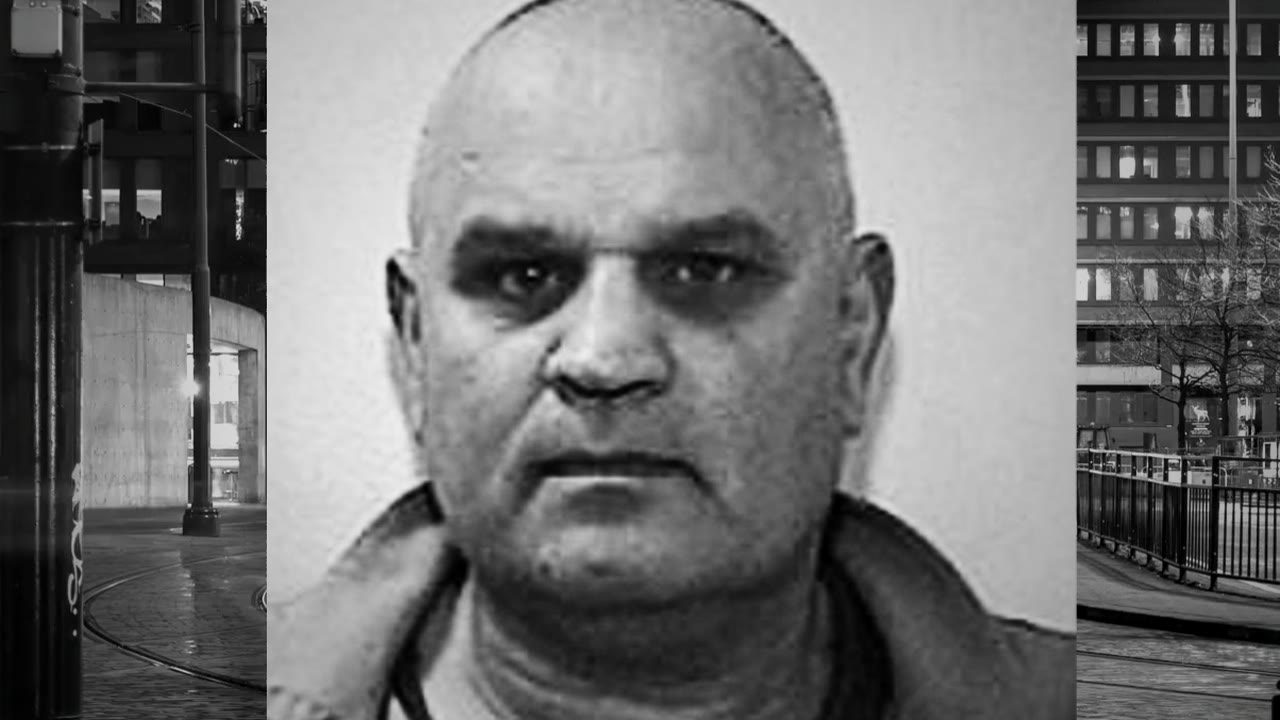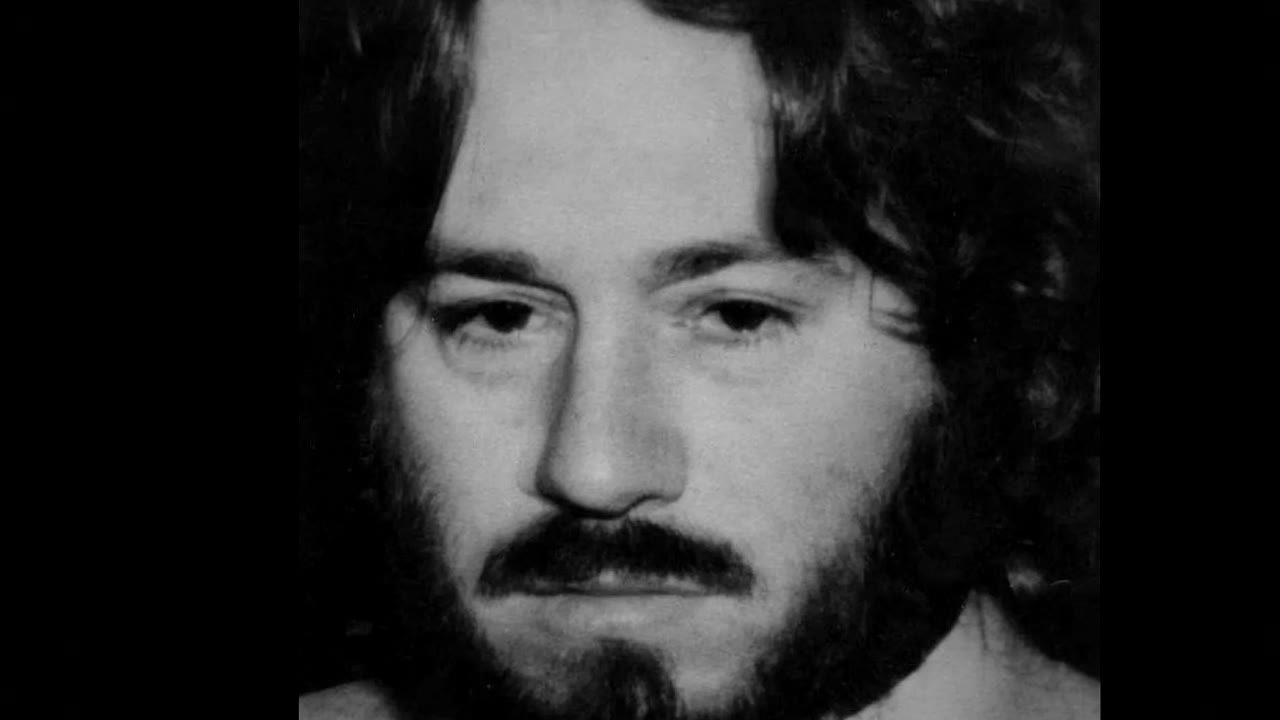
Michael Boyle took the wing mirror off the van so it would not spoil his aim.
It was Wednesday 20 September 1995, and he was parked in a stolen van in the square in south-east London where Tony Brindle lived, about ten yards from Brindle's car. He wore a wig. He had rigged a makeshift curtain inside the van to hide behind. He had a Browning semi-automatic pistol and a Magnum. He was in his late forties, from Dublin, and he had come over to kill a man he did not know.
He thought he was alone in the square. He was wrong, and he was about to find out how wrong. The question is how a hired gunman ended up being watched by the people he most needed not to see him, and the answer goes back to Bray.
It is something of a miracle that there was not a ninth life lost as a result of your conduct
Sir Lawrence Verney QC, the Old Bailey, 1997
1 · 1975
The boy from Bray
Boyle grew up in Bray, County Wicklow, the son of a soldier. He was a promising junior hurler. The family was thought of as respectable, and when he was first convicted of petty crime it surprised people who knew him. The Gardaí who dealt with him later said he was not like the criminals they usually met. "He was always presentable and very civil," one garda said. "You wouldn't take him for a criminal."
He was a criminal. In April 1975 he went on trial at the Four Courts in Dublin for armed robberies at Rathdrum and Enniskerry, in his home county. During the hearing he asked the prison officers if he could use the toilet. Somebody had taped a Webley revolver to the cistern for him. He came out holding it, threatened the officers and escaped.
He was caught the next month and sent to the Central Mental Hospital in Dundrum. He escaped from there too, shortly afterwards. A month later the Gardaí found him in a house in Dublin, and this time he stayed caught long enough to be convicted. The Four Courts had been built to hold the law, and it turned out to hold a revolver as well.
Timeline
- 1975Escapes from the Four Courts and Dundrum
- 1983Kidnaps Bill Somerville
- 1984Jailed for twelve years
- 1995Tells a Garda detective about the London job
- 20 Sep 1995Shoots Tony Brindle; shot by police
- 1997Life at the Old Bailey
2 · 1983
Two kidnappings
In August 1983 Boyle and another man, Eugene Prunty, went to the Wicklow home of a solicitor called Bill Somerville. The plan, according to The Irish Times, had been to take Somerville's son. When Somerville's wife said she could raise the £50,000 ransom, they took the solicitor himself.
They kept him for two days. He was taped to a tree in a forest about five miles from his own house, with a plastic bag over his head. The kidnappers rang the family with their demands, and the Gardaí taped the calls. Detectives listened and recognised the voices. Somerville was freed.
Boyle got bail. While he was out, he falsely imprisoned Alma Manina, a woman from Greystones, and demanded £60,000. In July 1984 he was convicted of both crimes and jailed for twelve years. Prunty got ten. For a man who could get a gun into a court toilet, Boyle had never learned to disguise his own voice on the phone.
3 · 1995
The intelligence officer
When he came out, Boyle tried a new line of work. After an arrest on suspicion of having a firearm, for which he was released without charge, he told Detective Inspector Tim Mulvey of Harcourt Square that he was an intelligence officer in the IRA. He offered to sell the Gardaí information for £20,000. Mulvey doubted it was worth the money and did not pay.
In February 1995 Boyle was arrested in Dublin again, and this time, the Old Bailey later heard, he became a police informer. That spring he told Mulvey about a job. A Dublin criminal had arranged for three gunmen, Boyle among them, to go to London and shoot members of the Brindle family, a south London family the court described as well known to the police. Mulvey told him to have nothing to do with it.
Then the Gardaí did what police do with information like that. They passed it to the South East Regional Crime Squad in England.
4 · 1995
Being watched
Boyle did not take Mulvey's advice. He travelled from Dublin to London at least six times to plan the shooting. He used safe houses and a Peugeot 205 GTi. He made more than a hundred visits to addresses connected to Tony Brindle, the man he had been told to kill.
He was not alone on any of them. The police in England had Boyle under surveillance from the start. They could have warned Brindle. They decided not to. Telling him, they argued later, "would result in an escalation of violence". So the man in the van was watching Brindle, and the police were watching the man in the van, and the only person in the square who knew nothing was the target.
The officers who finally moved in that Wednesday were dressed as British Gas workers. They had rifles.
5 · 1995
The square
When Tony Brindle walked out to his car, Boyle opened fire from the van. He fired three bullets, and all three hit. One went into Brindle's elbow, one into his chest, and one into his thighs. Brindle did not go down. He turned and ran back towards his house.
Boyle got out of the van and went after him. The prosecutor at the Old Bailey, Nigel Sweeney, said he was "intent on finishing him off". Two firearms officers came out to stop him. The court heard that Boyle turned towards them with the gun in his hand. "Fearing for Mr Brindle's life, and their own, they fired 14 shots at Boyle with their rifles," Sweeney said.
Five of them hit him. He was shot in the elbow, the chest, the shoulder blades and the left heel. Both men were taken to hospital, to different ones. Few people expected Boyle to live. A garda who knew him said he had always been tough, and he made what The Irish Times called an extraordinary recovery.
Brindle survived too. He refused to give evidence against the man who had shot him.
 Rather watch it?The film is on Gangland & True Crime Docs.Watch →
6 · 1997
The Old Bailey
Boyle went on trial at the Old Bailey in October 1996. He denied attempted murder and two charges of possessing a firearm with intent to endanger life. The first trial stopped when he sacked his lawyers. A second trial ended with the jury finding him guilty.
In March 1997 the Recorder of London, Sir Lawrence Verney QC, sentenced him to life, with a minimum of fifteen years. The judge spoke of "a feud which has lasted over many years and has cost eight lives". He told Boyle: "It is something of a miracle that there was not a ninth life lost as a result of your conduct." Boyle was 49. Back in Dublin, The Irish Times reported, the Gardaí were looking at what the case meant for certain people at home, and Boyle himself was thinking of suing the British government for his injuries. The police had shot him five times while he was trying to kill a man. He appeared to feel he had a claim.
He had escaped from a court and a hospital. He had kidnapped two people and talked his way into the confidence of a Garda inspector. What he never managed was to do a job unseen. The full story of the man from Bray, and of the street he was sent to, is in our film on Gangland.