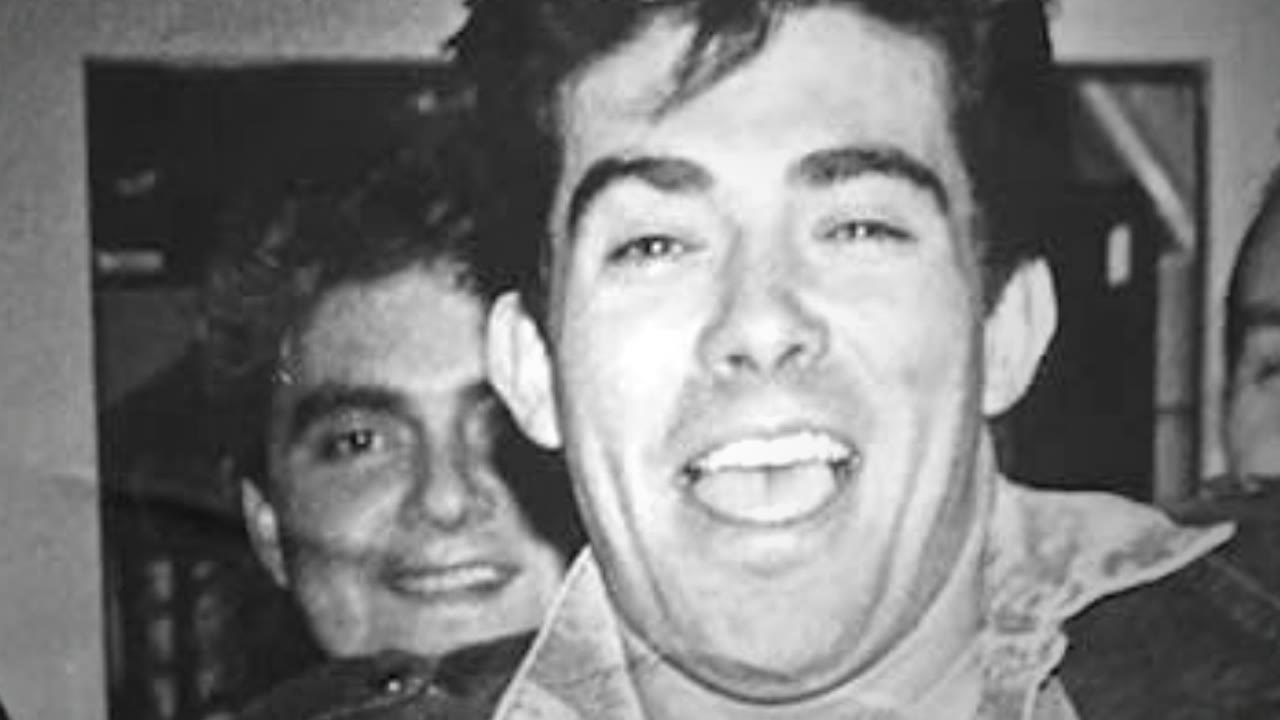
At about ten o'clock on the evening of Tuesday 1 June 1993, a man in a dark brown jacket walked into the Royal Hotel in Hackney, ordered a pint of Foster's, put two pound coins on the bar, and did not touch his drink.
There were four people in the bar. One of them was a big, quiet regular the landlord knew as Mick. He was about eighteen stone, he lived round the corner, and he talked about his baby granddaughter. The man with the pint backed away from the bar, took out a Webley .38 revolver, and fired four times. As he pulled the trigger he swore at Mick.
Then he walked out, slammed the door in the faces of two young women coming in, and drove away in a white Ford Fiesta.
We have one big black hole
Detective Superintendent Harry Wilkins, 1993
Mick was dead on the floor. Nobody in the pub knew his real name. It took the police five days to tell them. He was 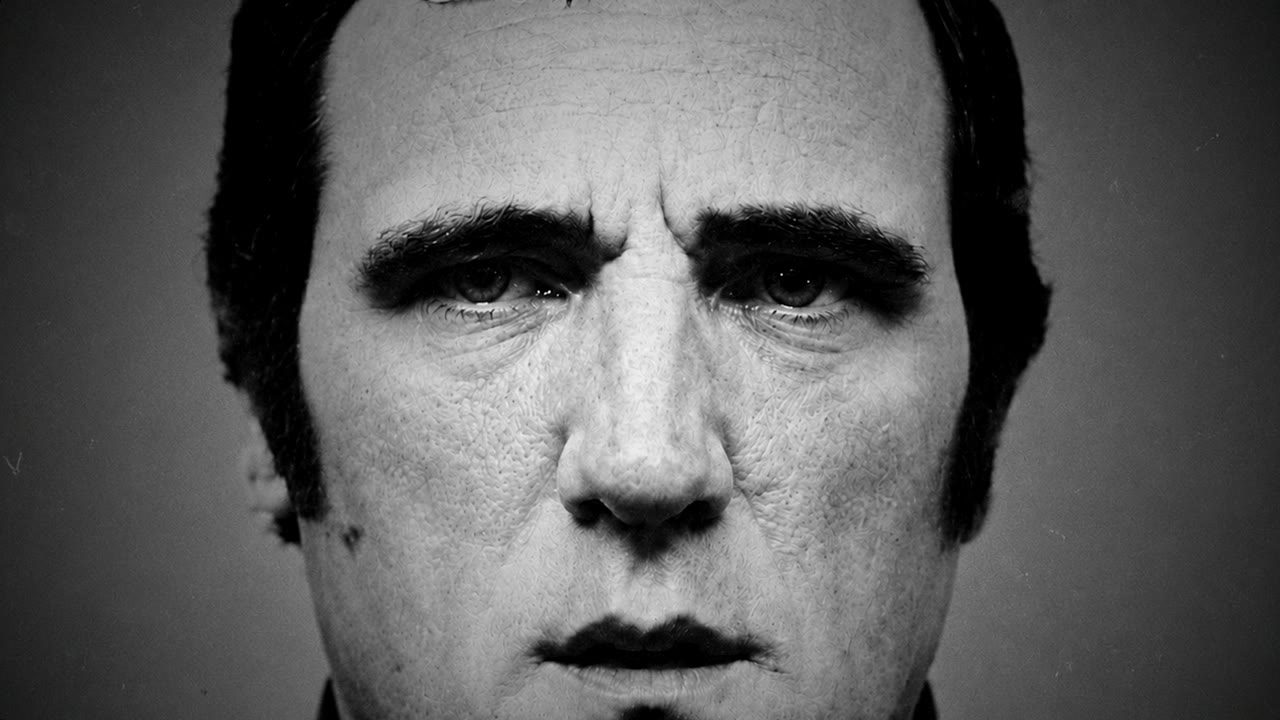 Jimmy Moody, and he had been on the run for thirteen years.
1
The hardest man in London
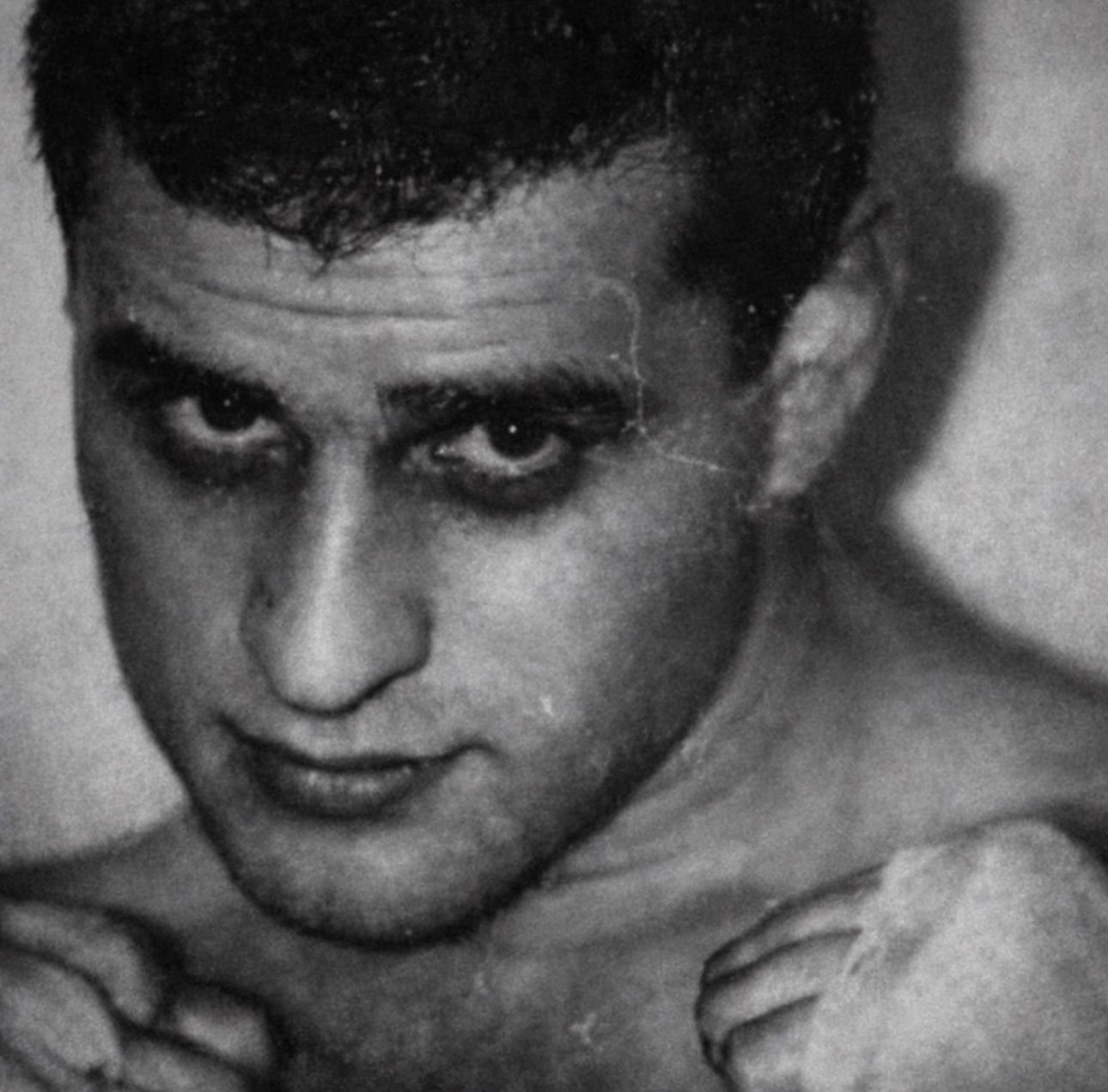
James Alfred Moody was born in Looe, Cornwall, on 27 February 1941. His mother was an East End girl from Camberwell who had been evacuated there in the war. The family came back to London, and Moody left school with nothing and went into scrap metal, the same trade that made the Richardsons.
He became one of their enforcers, and did freelance work for the Krays across the river. By the mid-sixties men who knew both firms called him the hardest man in London. The police who chased him used two words more than any others. "Extremely professional," they said, and "extremely intimidating".
In March 1966 he was at Mr Smith's club in Catford on the night of the shoot-out that helped send the Richardsons to prison. He was charged with affray and found not guilty. In the late sixties he and his older brother Richard were jailed for six years for the manslaughter of a merchant navy steward called William Day, who was found in his garden with his head smashed in after the brothers had exchanged words with him. Moody was released in 1972.
He came out into a London that had moved on. The Krays were inside and so were the Richardsons, and Moody found other work.
Timeline
- 1941Born in Looe
- 1966Found not guilty of affray after Mr Smith's club
- 1972Released after the manslaughter sentence
- 1978Blackwall Tunnel van robbery
- 1979Arrested and remanded to Brixton
- 16 Dec 1980Escapes from Brixton
- 1 Jun 1993Shot dead at the Royal Hotel
2 · 1978
The Chainsaw Gang
His speciality became armoured vans. His crew cut their way into the side of security vehicles with a chainsaw, and the tabloids called them the Chainsaw Gang. Then the police noticed the raids always fell on a Thursday, which was payroll day, and the name changed to the Thursday Gang. The take, according to the Independent's later reporting, was well over two million pounds.
In 1978 Moody stopped a security van in the Blackwall Tunnel dressed as a police officer. While the van crew wondered what they had done wrong, he went along the queue of other cars and took their keys, so nobody could drive off and raise the alarm. A former associate summed him up later in one line. "He wasn't a born leader; he was a natural lieutenant."
He was arrested in 1979 and remanded to Brixton, charged with three armed robberies worth £930,000.
3 · 1980
Out through the wall
D wing at Brixton held the men the system thought most likely to run. In the next cell to Moody was Gerard Tuite, twenty-five, from County Cavan, a member of the Provisional IRA charged with explosives offences and linked to a string of bombings in British cities.
On 16 December 1980 they went. Tools had been smuggled in, reportedly inside a sock. The two men broke through the brickwork of their cells and got out onto a flat roof. They crossed the exercise yard, climbed builders' scaffolding, used a plank to reach the outer wall, and dropped down on the far side. A third prisoner, a robber called Stan Thompson, went with them.
Tuite was found in a flat in Drogheda in March 1982 and became the first Irishman tried at home for crimes committed in Britain. He got ten years.
Moody was never caught.
4
Thirteen years of nothing
What he did for those thirteen years is still largely unknown. The story most often told is that he went to Northern Ireland and worked alongside the Provisional IRA. The crime writer Wensley Clarkson credits him with a piece of underworld slang from that time. To give someone an OBE, he wrote, meant one behind the ear.
By the late 1980s he was back in London under another name. Wherever he had been, Scotland Yard, the RUC and the security services all wanted to know.
His name came up in 1991. On Saturday 3 August that year, a young man called David Brindle and a bystander, Stanley Silk, were shot dead in the Bell pub on East Street, Walworth. One of the gunmen was heard to shout "This is for Abbi", taken by many to mean Ahmet "Turkish Abbi" Abdullah, who had been shot dead in a Walworth betting shop that March. Detectives hunting the killers were given a description that matched a pub bouncer. They raided the bouncer's empty flat, and the fingerprints came back as Jimmy Moody's.
That is as far as it ever went. Moody was never charged with the Bell killings, or with anything else from those years. David Brindle's mother had her own view. "That man was evil and I hope he rots in hell," she said. Moody's son said his father never once mentioned Brindle to him, and took that as proof he had nothing to do with it. Other killings were linked to Moody in the papers at the time. The Independent's verdict on all of it was blunt. "All of this is speculation, probably unfounded."
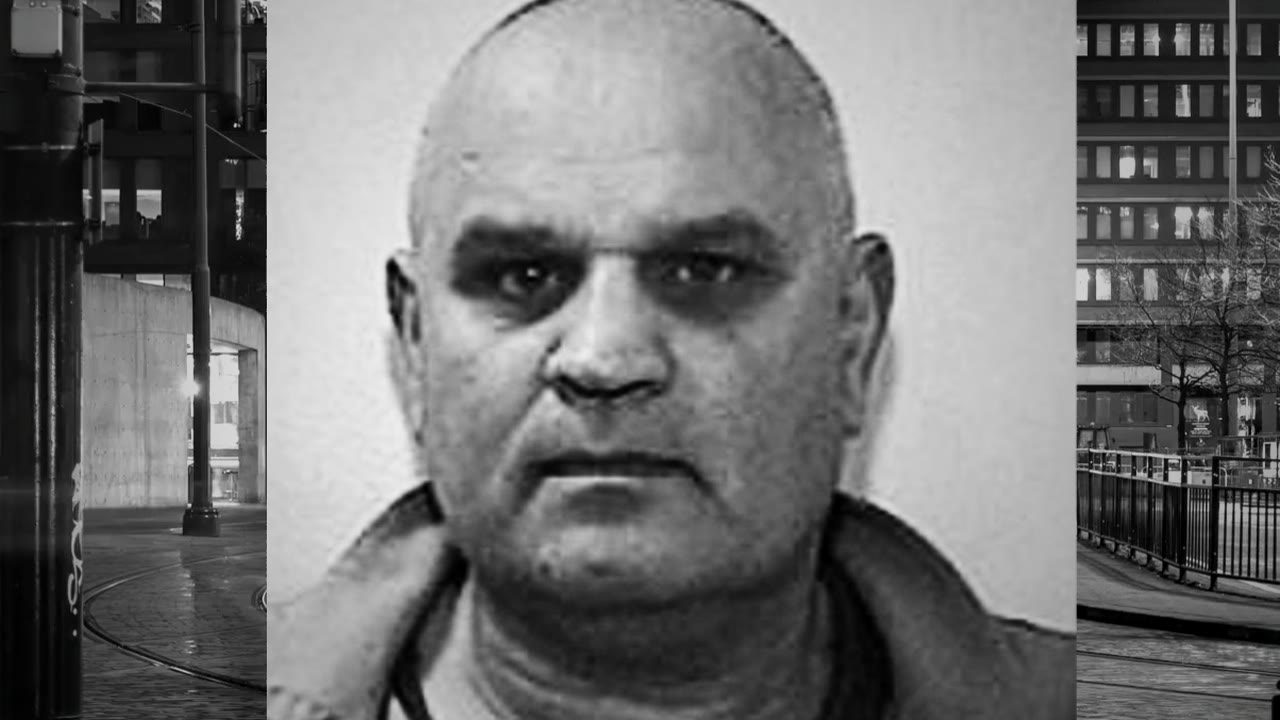
By 1993 he was living as Mick in flat 12, Wadeson Street, off Mare Street in Hackney. He had anti-burglar bars on the door. Two or three times a week, always on foot and always on a weekday evening, he walked less than half a mile to the Royal Hotel on the edge of Victoria Park, over the canal and down Gore Road.
 Rather watch it?The film is on Gangland & True Crime Docs.Watch →
5 · 1993
Four shots and a full pint
He left the flat shortly after half past seven on 1 June, locking the bars behind him. "Evening, Mick," said the landlord, Joe Anderson. His sister Sharon, who ran the pub with him, liked the big man. "He was a fine man and seemed very caring," she said. "He talked about his baby granddaughter."
The gunman was described as five foot ten to six foot, between thirty and forty, with blue eyes and shoulder-length blond or greying hair. He wore black monkey boots. Moody was hit twice in the back, once in the chest and once in the head. In his pockets the police found £90 and his house keys.
A detective on the case was struck by one detail. The gunman had sworn at his victim as he fired. "It had all the marks of an execution," he said. "But the killer did an odd thing for a professional. Hired killers don't usually betray such emotional signs." Another officer summed up the dead man's reputation. "Moody was not the sort of guy you fight. You don't punch him or rough him up. You kill him."
The body was identified at Poplar mortuary on Sunday 6 June by Detective Superintendent Harry Wilkins, who had spent thirteen years looking for him and was eight weeks from retirement.
Then it got stranger. The police did not trace the flat in Wadeson Street for three weeks. When they got there, it had been emptied. The security bars had been wrenched off. Whoever had been in first had taken everything. Wilkins admitted he had almost nothing. "We have one big black hole," he said, "no real idea what he'd been doing, other than a bit of interior decorating. We found rolls of wallpaper in his flat."
The theories have not changed in thirty years. Revenge for the Bell. An IRA arms cache. A drugs debt. Something from the old days. Wilkins was asked about motive at the time. "Could be anything," he said.
Nobody has ever been charged with the murder of Jimmy Moody. Nobody knows who arranged his flat, or who emptied it. The man who shot him paid for his pint and never took a sip.
The full story is in our film on Gangland.